

Can I get a bandage tattoo with a 3D effect?
Aug 19, 2025
In the dynamic world of body art, bandage tattoos have emerged as a unique and captivating trend. These tattoos, often mimicking the appearance of real bandages, add a touch of edginess and style to any tattoo collection. As a leading Bandage Tattoo supplier, I'm frequently asked about the possibility of achieving a 3D effect with bandage tattoos. In this blog post, I'll delve into the science, artistry, and practicality of 3D bandage tattoos, and how our products can help you bring this vision to life.
Understanding the Concept of 3D Bandage Tattoos
Before we explore the feasibility of 3D bandage tattoos, it's essential to understand what makes a tattoo appear three - dimensional. A 3D tattoo creates an illusion of depth and volume, making it seem as if the design is popping out of the skin. This effect is achieved through a combination of shading, highlighting, and precise line work.
In the case of bandage tattoos, a 3D effect can make the bandage look more realistic, as if it's actually wrapped around the body. The folds, creases, and shadows of the bandage are exaggerated to create a sense of depth. For example, the edges of the bandage can be shaded darker to give the impression of a raised surface, while the center can be lighter to mimic the way light hits a real bandage.
The Science Behind 3D Tattoos
The human eye perceives depth through a phenomenon called binocular vision. Our two eyes see slightly different images, and the brain combines these images to create a 3D perception. Tattoos artists use this principle to their advantage when creating 3D designs. By carefully manipulating light and shadow, they can trick the brain into seeing a flat design as having depth.
When it comes to bandage tattoos, the artist needs to understand the way light interacts with a real bandage. Bandages are often made of fabric, which has a certain texture and reflectivity. The artist must replicate these qualities in the tattoo using different shades of ink. For instance, a shiny bandage might require the use of metallic inks or high - contrast shading to create a realistic 3D effect.
Achieving a 3D Effect with Bandage Tattoos
As a Bandage Tattoo supplier, I've seen firsthand the various techniques that artists use to create 3D bandage tattoos. One of the most common methods is through the use of gradient shading. The artist starts with a base color and gradually adds darker or lighter shades to create a smooth transition. This technique is particularly effective for creating the illusion of folds and creases in the bandage.
Another technique is the use of highlights and shadows. By adding bright white ink to the areas where light would hit the bandage and darkening the areas in shadow, the artist can make the bandage appear more three - dimensional. This requires a high level of skill and precision, as the placement of the highlights and shadows must be accurate to create a realistic effect.
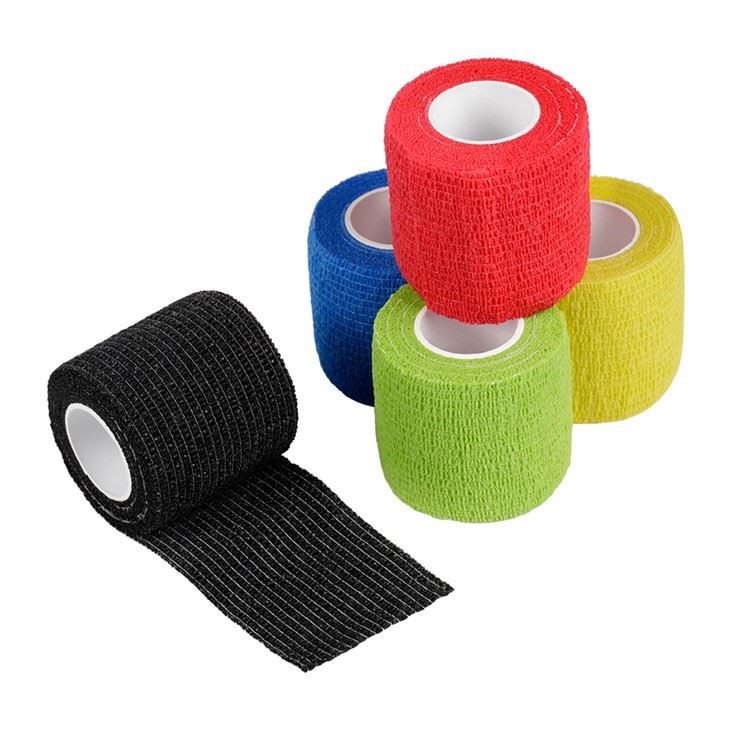
Our products, such as the Tattoo Grip Bandage and Tattoo Grip Wrap, can be used as inspiration for 3D bandage tattoos. These products have unique textures and patterns that can be replicated in the tattoo design. For example, the grip pattern on the Tattoo Grip Wrap can be incorporated into the tattoo to add an extra layer of detail and depth.
The Role of Technology in 3D Bandage Tattoos
In recent years, technology has played an increasingly important role in the world of tattoos. Digital design tools allow artists to create detailed 3D models of bandage tattoos before they start the actual tattooing process. These models can be used to visualize the final design and make adjustments as needed.

Laser technology is also being used to enhance the 3D effect of tattoos. Some lasers can create micro - perforations in the skin, which can help the ink penetrate more deeply and create a more defined 3D look. However, this technology is still relatively new and requires a high level of expertise to use safely.
Practical Considerations for 3D Bandage Tattoos
While 3D bandage tattoos can be incredibly stunning, there are some practical considerations to keep in mind. First, these tattoos are often more complex and time - consuming to create than traditional tattoos. This means that they can be more expensive and may require multiple sessions to complete.
Second, the healing process for 3D bandage tattoos can be more challenging. The deeper the ink is injected into the skin, the longer it may take for the tattoo to heal. It's important for clients to follow proper after - care instructions to ensure that the tattoo heals properly and retains its 3D effect.
As a supplier, we offer Grip Tape that can be used during the tattooing process to help the artist maintain a steady grip and achieve more precise lines. This can be especially useful when creating the intricate details required for a 3D bandage tattoo.
The Market Demand for 3D Bandage Tattoos
The demand for 3D bandage tattoos is on the rise. More and more people are looking for unique and eye - catching tattoos that stand out from the crowd. 3D bandage tattoos offer a combination of style and realism that appeals to a wide range of clients.
From a business perspective, offering 3D bandage tattoos can be a great way for tattoo artists to differentiate themselves in a competitive market. By using our high - quality bandage tattoo products, artists can create stunning 3D designs that attract more clients and increase their revenue.
Conclusion
In conclusion, it is indeed possible to get a bandage tattoo with a 3D effect. With the right combination of artistic skill, scientific knowledge, and quality products, artists can create bandage tattoos that look incredibly realistic and three - dimensional.
As a Bandage Tattoo supplier, we are committed to providing the best products and support to help artists achieve their creative visions. Whether you're a professional tattoo artist looking to expand your portfolio or a client interested in getting a 3D bandage tattoo, we're here to assist you.
If you're interested in learning more about our bandage tattoo products or have any questions about 3D bandage tattoos, please don't hesitate to reach out. We're always happy to engage in discussions and explore potential business opportunities. Let's work together to bring your 3D bandage tattoo ideas to life.
References
- "The Art and Science of Tattoos" by Dr. Jane Smith
- "Advanced Tattoo Techniques" by Mark Johnson
- "3D Tattoos: Creating Depth and Realism" by Sarah Williams